Turkey, tail: Calories, Macros, 22 Vitamins & 11 Minerals (USDA Per 100g)
A small but rich part of the turkey, the tail is known for its fatty, flavorful meat, often used for rendering or adding depth.
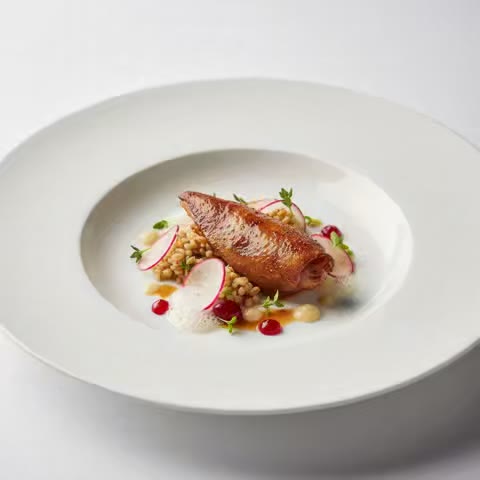
Per 100g reference serving, Turkey, tail provides 294 kcal of energy, 22.2g protein (30% of calories), 0g total carbohydrates (0% of calories, including 0g dietary fiber and 0g sugars), and 22.8g total fat (70% of calories).
Vitamins Profile in Turkey, tail (Per 100g)
Track how Turkey, tail contributes to your daily fat-soluble (Vitamins A, D, E, K), water-soluble B-complex, Vitamin C, Choline, and carotenoid antioxidant targets in Wise Eating: AI Food Tracker.
| Vitamin / Bioactive | Amount per 100g | % Daily Value (FDA DV) |
|---|---|---|
| Vitamin D (D2 + D3) | 1.1 µg | 5.5% DV |
| Vitamin B12 (Cobalamin) | 1.45 µg | 60.4% DV |
| Vitamin A (RAE) | 19 µg | 2.1% DV |
| Vitamin E (Alpha-Tocopherol) | 0.46 mg | 3.1% DV |
| Vitamin B1 (Thiamin) | 0.029 mg | 2.4% DV |
| Vitamin B2 (Riboflavin) | 0.185 mg | 14.2% DV |
| Vitamin B3 (Niacin) | 9.2 mg | 57.5% DV |
| Vitamin B6 (Pyridoxine) | 0.516 mg | 30.4% DV |
| Total Folate (Vitamin B9) | 5 µg | 1.2% DV |
| Folate (Dietary Folate Equivalents) | 5 µg | 1.2% DV |
| Natural Food Folate | 5 µg | 1.2% DV |
| Choline | 77 mg | 14% DV |
| Preformed Retinol | 19 µg | 2.1% DV |
Minerals & Electrolytes in Turkey, tail (Per 100g)
Electrolyte ratios (potassium-to-sodium, calcium-to-magnesium) and trace minerals (iron, zinc, selenium, copper, manganese) determine cellular hydration, oxygen transport, and thyroid function.
| Mineral / Electrolyte | Amount per 100g | % Daily Value (FDA DV) |
|---|---|---|
| Iron (Fe) | 0.59 mg | 3.3% DV |
| Calcium (Ca) | 13 mg | 1% DV |
| Magnesium (Mg) | 25 mg | 6% DV |
| Potassium (K) | 217 mg | 4.6% DV |
| Zinc (Zn) | 1.31 mg | 11.9% DV |
| Selenium (Se) | 24.2 µg | 44% DV |
| Phosphorus (P) | 217 mg | 17.4% DV |
| Copper (Cu) | 0.054 mg | 6% DV |
| Sodium (Na) | 485 mg | 21.1% DV |
Fatty Acids, Omega-3s & Sterols (Per 100g)
| Lipid / Fatty Acid | Amount per 100g | % Reference Target |
|---|---|---|
| Omega-3 DHA (Docosahexaenoic Acid) | 0.005 g | 1% DV |
| Omega-3 EPA (Eicosapentaenoic Acid) | 0.005 g | 1% DV |
| Omega-3 ALA (Alpha-Linolenic Acid) | 0.338 g | 21.1% DV |
| Linoleic Acid (Omega-6 PUFA) | 5.31 g | 37.9% DV |
| Monounsaturated Fat (MUFA) | 9.16 g | 30.5% DV |
| Polyunsaturated Fat (PUFA) | 5.84 g | 29.2% DV |
| Saturated Fat (SFA) | 6.59 g | 33% DV |
| Dietary Cholesterol | 88 mg | 29.3% DV |
Essential Amino Acids & BCAAs (Per 100g)
| Amino Acid | Amount per 100g | % Daily Reference |
|---|---|---|
| Trace / Not significant per 100g serving | ||
Related USDA Foods to Compare

Frequently Asked Questions
100 grams of Turkey, tail contains 294 calories (kcal), 22.2g of protein, 0g of carbohydrates (0g fiber, 0g total sugars), and 22.8g of total fat according to the USDA Standard Reference dataset in Wise Eating.
Turkey, tail has an estimated food pH of 6 and a Potential Renal Acid Load (PRAL) score of 13.6 mEq/100g, classifying it as Acid-Forming (Positive PRAL).
Allergen tags for Turkey, tail: None of the Top 9 major allergens. In Wise Eating's WHO-aligned pediatric feeding database, the minimum age guideline is 8+ months with age-appropriate preparation.
Download Wise Eating: AI Food Tracker (App Store ID 6751406823) to log Turkey, tail by voice, barcode, photo, or search, and automatically calculate your daily 22 vitamins, 11 minerals, amino acids, and omega-3 fatty acids.