When Can Babies Eat Tuna salad sandwich wrap? (9+ Months WHO Safety, Allergens & USDA Nutrients)
Evidence-based pediatric feeding profile for Tuna salad sandwich wrap: minimum introduction age (9+ months), allergen screening, texture progression for Baby-Led Weaning (BLW) vs spoon-feeding, and critical infant micronutrients per 100g.
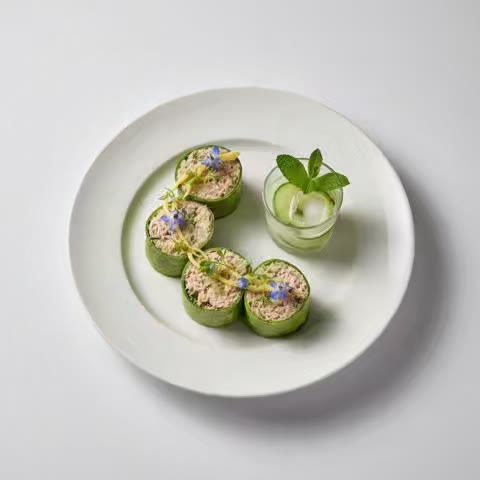
A convenient and fresh take on a classic, this wrap features creamy, savory tuna salad, often mixed with celery and mayonnaise, along with crisp lettuce, all tightly rolled in a soft tortilla. --- RECIPE --- Servings: 1 Prep Time: 7 minutes Ingredients: - 1/2 cup prepared tuna salad - 1 large flour tortilla - 1-2 lettuce leaves Instructions: 1. Lay the tortilla flat. 2. Spread tuna salad evenly in the center of the tortilla. 3. Add lettuce leaves. 4. Fold in the sides of the tortilla, then tightly roll it up from the bottom. 5. Slice in half diagonally and serve. In Wise Eating: AI Food Tracker, adding a child profile (9 months+) automatically checks every meal and recipe ingredient against WHO infant safety rules, choking hazards, and allergen flags.
Pediatric Growth Micronutrients in Tuna salad sandwich wrap (Per 100g USDA)
Between 6 and 24 months, infants require high nutrient density per spoonful—especially Iron (for myelination), Zinc (immune and linear growth), Choline & DHA (brain cortex development), and Calcium & Vitamin D (skeletal ossification).
How to Prepare Tuna salad sandwich wrap by Baby Age Stage (6–24 Months)
| Infant / Toddler Stage | Texture & Cutting Preparation | Feeding Method & Safety Notes |
|---|---|---|
| 6–8 Months (Early Solids) | Wait until 9+ months before introducing. | Introduce lower-risk 6m+ single-ingredient foods first in Wise Eating. |
| 9–12 Months (Pincer Grasp) | Soft bite-sized pea-sized cubes, shredded strips, or minced into porridge/yogurt. | Encourage self-feeding with thumb-and-forefinger pincer grasp alongside iron-rich pairings. |
| 12–24 Months (Toddler Table) | Tender fork-bite pieces integrated into family recipes with minimal added sodium. | Combine with Vitamin C sources (0.4mg native per 100g) to maximize non-heme iron uptake. |
Complete Infant Micronutrient Table for Tuna salad sandwich wrap
| Pediatric Nutrient | Per 100g USDA | Per 30g Baby Portion (~2 Tbsp) | Role in Infant Development |
|---|---|---|---|
| Energy (Calories) | 244 kcal | 73.2 kcal | Fuels rapid infant weight and brain growth |
| Protein | 10.6 g | 3.18 g | Tissue, organ, and enzyme synthesis |
| Total Fat | 14.8 g | 4.45 g | Myelin sheath formation & fat-soluble vitamins |
| Iron (Fe) | 1.7 mg | 0.51 mg | Prevents infant anemia & supports cognitive development |
| Zinc (Zn) | 0.72 mg | 0.216 mg | Immune defense, gut mucosa & growth velocity |
| Choline | 18.8 mg | 5.64 mg | Acetylcholine memory pathways & neural plasticity |
| Calcium (Ca) | 150 mg | 45 mg | Bone & primary tooth mineralization |
| Vitamin A (RAE) | 40 µg | 12 µg | Retinal vision & respiratory mucosal barrier |
| Vitamin C | 0.4 mg | 0.12 mg | Enhances non-heme iron absorption up to 3x |
| Vitamin D | 0.8 µg | 0.24 µg | Calcium absorption & rickets prevention |
| Total Folate (B9) | 36 µg | 10.8 µg | Rapid cell division & hematopoiesis |
| Omega-3 DHA | 0.061 g | 0.018 g | Retinal acuity & cerebral cortex structure |
More Baby & Toddler First Foods to Explore


Frequently Asked Questions
Based on WHO and pediatric nutrition guidelines built into Wise Eating, Tuna salad sandwich wrap has a recommended minimum age of 9+ months, provided it is prepared in an age-appropriate, choke-safe texture.
Yes, Tuna salad sandwich wrap is tagged with the following allergen(s): Fish, Cereals containing gluten, Eggs, Mustard, Soybeans. Introduce in small single-ingredient amounts during daytime hours and monitor for reactions.
Per 100g (or divide by ~3.3 for a 30g two-tablespoon baby serving), Tuna salad sandwich wrap provides 1.7mg of Iron, 0.72mg of Zinc, 18.8mg of Choline, 150mg of Calcium, and 0.061g of Omega-3 DHA.
Wise Eating: AI Food Tracker (App Store ID 6751406823) replaces standalone $99/yr baby food apps by combining WHO minimum age alerts, allergen screening, and 100+ USDA micronutrients for both infants and adults.