When Can Babies Eat Oysters, baked or broiled? (8+ Months WHO Safety, Allergens & USDA Nutrients)
Evidence-based pediatric feeding profile for Oysters, baked or broiled: minimum introduction age (8+ months), allergen screening, texture progression for Baby-Led Weaning (BLW) vs spoon-feeding, and critical infant micronutrients per 100g.
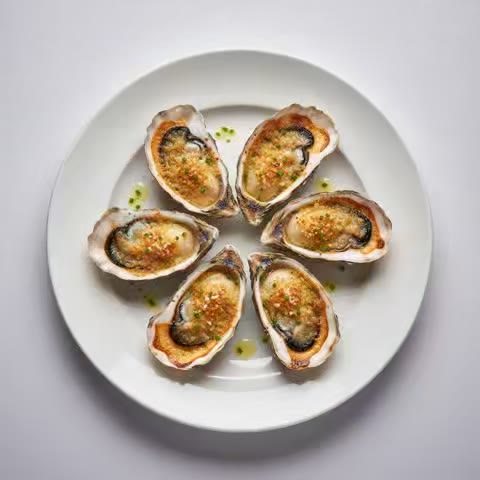
Baked or broiled oysters, often topped with butter, garlic, and breadcrumbs, offer a warm, savory, and slightly crispy twist on the classic mollusk. --- RECIPE --- Servings: 2-4 Prep Time: 15 minutes (if oysters are already shucked) Ingredients: - 1 dozen fresh oysters, scrubbed clean and shucked (on the half shell) - 1/4 cup unsalted butter, melted - 2 cloves garlic, minced - 2 tbsp fresh parsley, chopped - 1/4 cup breadcrumbs (panko or regular) - 1/4 tsp black pepper - Lemon wedges, for serving Instructions: 1. Preheat oven to 400°F (200°C) or preheat broiler. 2. Arrange shucked oysters on the half shell on a baking sheet, ideally on a bed of rock salt to keep them stable. 3. In a small bowl, combine melted butter, minced garlic, parsley, breadcrumbs, and black pepper. 4. Spoon a small amount of the butter-breadcrumb mixture over each oyster. 5. Bake for 8-12 minutes, or broil for 3-5 minutes, until the edges of the oysters curl and the topping is golden brown and bubbly. 6. Serve immediately with lemon wedges. In Wise Eating: AI Food Tracker, adding a child profile (8 months+) automatically checks every meal and recipe ingredient against WHO infant safety rules, choking hazards, and allergen flags.
Pediatric Growth Micronutrients in Oysters, baked or broiled (Per 100g USDA)
Between 6 and 24 months, infants require high nutrient density per spoonful—especially Iron (for myelination), Zinc (immune and linear growth), Choline & DHA (brain cortex development), and Calcium & Vitamin D (skeletal ossification).
How to Prepare Oysters, baked or broiled by Baby Age Stage (6–24 Months)
| Infant / Toddler Stage | Texture & Cutting Preparation | Feeding Method & Safety Notes |
|---|---|---|
| 6–8 Months (Early Solids) | Smooth puree, mashed fork texture, or soft two-finger-squishable strips. | Pass the squish test between thumb and index finger; avoid hard round pieces and added salt/honey. |
| 9–12 Months (Pincer Grasp) | Soft bite-sized pea-sized cubes, shredded strips, or minced into porridge/yogurt. | Encourage self-feeding with thumb-and-forefinger pincer grasp alongside iron-rich pairings. |
| 12–24 Months (Toddler Table) | Tender fork-bite pieces integrated into family recipes with minimal added sodium. | Combine with Vitamin C sources (0mg native per 100g) to maximize non-heme iron uptake. |
Complete Infant Micronutrient Table for Oysters, baked or broiled
| Pediatric Nutrient | Per 100g USDA | Per 30g Baby Portion (~2 Tbsp) | Role in Infant Development |
|---|---|---|---|
| Energy (Calories) | 104 kcal | 31.2 kcal | Fuels rapid infant weight and brain growth |
| Protein | 7.11 g | 2.13 g | Tissue, organ, and enzyme synthesis |
| Total Fat | 6.66 g | 2 g | Myelin sheath formation & fat-soluble vitamins |
| Iron (Fe) | 5.73 mg | 1.72 mg | Prevents infant anemia & supports cognitive development |
| Zinc (Zn) | 48.8 mg | 14.6 mg | Immune defense, gut mucosa & growth velocity |
| Choline | 81.1 mg | 24.3 mg | Acetylcholine memory pathways & neural plasticity |
| Calcium (Ca) | 74 mg | 22.2 mg | Bone & primary tooth mineralization |
| Vitamin A (RAE) | 36 µg | 10.8 µg | Retinal vision & respiratory mucosal barrier |
| Vitamin C | 0 mg | 0 mg | Enhances non-heme iron absorption up to 3x |
| Vitamin D | 0 µg | 0 µg | Calcium absorption & rickets prevention |
| Total Folate (B9) | 7 µg | 2.1 µg | Rapid cell division & hematopoiesis |
| Omega-3 DHA | 0.169 g | 0.051 g | Retinal acuity & cerebral cortex structure |
More Baby & Toddler First Foods to Explore
Frequently Asked Questions
Based on WHO and pediatric nutrition guidelines built into Wise Eating, Oysters, baked or broiled has a recommended minimum age of 8+ months, provided it is prepared in an age-appropriate, choke-safe texture.
Yes, Oysters, baked or broiled is tagged with the following allergen(s): Molluscs. Introduce in small single-ingredient amounts during daytime hours and monitor for reactions.
Per 100g (or divide by ~3.3 for a 30g two-tablespoon baby serving), Oysters, baked or broiled provides 5.73mg of Iron, 48.8mg of Zinc, 81.1mg of Choline, 74mg of Calcium, and 0.169g of Omega-3 DHA.
Wise Eating: AI Food Tracker (App Store ID 6751406823) replaces standalone $99/yr baby food apps by combining WHO minimum age alerts, allergen screening, and 100+ USDA micronutrients for both infants and adults.