When Can Babies Eat Biryani with chicken? (8+ Months WHO Safety, Allergens & USDA Nutrients)
Evidence-based pediatric feeding profile for Biryani with chicken: minimum introduction age (8+ months), allergen screening, texture progression for Baby-Led Weaning (BLW) vs spoon-feeding, and critical infant micronutrients per 100g.
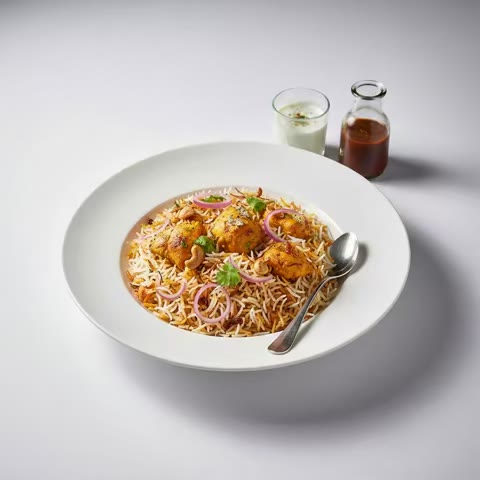
A fragrant and elaborate South Asian rice dish, where basmati rice is layered with marinated chicken, aromatic spices, and sometimes vegetables, then slow-cooked to perfection. --- RECIPE --- Servings: 4 Prep Time: 30 minutes (plus marinating time) Ingredients: - 1 lb boneless, skinless chicken thighs or breast, cut into 1-inch pieces - 1 cup basmati rice - 1/2 cup plain yogurt - 1 onion, thinly sliced and fried until crispy (birista) - 2 tbsp ginger-garlic paste - 1/2 cup chopped fresh mint leaves - 1/2 cup chopped fresh cilantro - 2 green chilies, slit - 1/2 tsp turmeric powder - 1 tsp red chili powder - 1 tbsp biryani masala powder - 1/4 cup ghee or oil - Whole spices: 2 bay leaves, 4 green cardamom pods, 4 cloves, 1-inch cinnamon stick - Salt to taste - Pinch of saffron strands soaked in 2 tbsp warm milk (optional) - Fried onions and fresh cilantro for garnish Instructions: 1. Marinate chicken: In a bowl, combine chicken, yogurt, ginger-garlic paste, half of the fried onions, mint, cilantro, green chilies, turmeric, red chili powder, biryani masala, and salt. Mix well and refrigerate for at least 30 minutes, or up to 4 hours. 2. Cook rice: Rinse basmati rice until water runs clear. In a large pot, bring plenty of salted water to a boil. Add rice and cook until 70% done (al dente). Drain and set aside. 3. Assemble biryani: In a heavy-bottomed pot or Dutch oven, heat ghee/oil over medium heat. Add whole spices and sauté for 30 seconds until fragrant. 4. Add the marinated chicken mixture to the pot and cook for 10-15 minutes, stirring occasionally, until the chicken is partially cooked and the sauce thickens. 5. Layer the rice over the chicken mixture. Sprinkle with remaining fried onions, a little more fresh mint/cilantro, and the saffron milk (if using). 6. Cover the pot tightly (you can seal the lid with dough if desired for 'dum' cooking). Reduce heat to very low and cook for 20-25 minutes, allowing the biryani to steam and flavors to meld. 7. Gently fluff the biryani with a fork before serving. Garnish with more fried onions and fresh cilantro. In Wise Eating: AI Food Tracker, adding a child profile (8 months+) automatically checks every meal and recipe ingredient against WHO infant safety rules, choking hazards, and allergen flags.
Pediatric Growth Micronutrients in Biryani with chicken (Per 100g USDA)
Between 6 and 24 months, infants require high nutrient density per spoonful—especially Iron (for myelination), Zinc (immune and linear growth), Choline & DHA (brain cortex development), and Calcium & Vitamin D (skeletal ossification).
How to Prepare Biryani with chicken by Baby Age Stage (6–24 Months)
| Infant / Toddler Stage | Texture & Cutting Preparation | Feeding Method & Safety Notes |
|---|---|---|
| 6–8 Months (Early Solids) | Smooth puree, mashed fork texture, or soft two-finger-squishable strips. | Pass the squish test between thumb and index finger; avoid hard round pieces and added salt/honey. |
| 9–12 Months (Pincer Grasp) | Soft bite-sized pea-sized cubes, shredded strips, or minced into porridge/yogurt. | Encourage self-feeding with thumb-and-forefinger pincer grasp alongside iron-rich pairings. |
| 12–24 Months (Toddler Table) | Tender fork-bite pieces integrated into family recipes with minimal added sodium. | Combine with Vitamin C sources (6.2mg native per 100g) to maximize non-heme iron uptake. |
Complete Infant Micronutrient Table for Biryani with chicken
| Pediatric Nutrient | Per 100g USDA | Per 30g Baby Portion (~2 Tbsp) | Role in Infant Development |
|---|---|---|---|
| Energy (Calories) | 104 kcal | 31.2 kcal | Fuels rapid infant weight and brain growth |
| Protein | 7.15 g | 2.15 g | Tissue, organ, and enzyme synthesis |
| Total Fat | 2.38 g | 0.714 g | Myelin sheath formation & fat-soluble vitamins |
| Iron (Fe) | 0.84 mg | 0.252 mg | Prevents infant anemia & supports cognitive development |
| Zinc (Zn) | 0.63 mg | 0.189 mg | Immune defense, gut mucosa & growth velocity |
| Choline | 20.2 mg | 6.06 mg | Acetylcholine memory pathways & neural plasticity |
| Calcium (Ca) | 34 mg | 10.2 mg | Bone & primary tooth mineralization |
| Vitamin A (RAE) | 19 µg | 5.7 µg | Retinal vision & respiratory mucosal barrier |
| Vitamin C | 6.2 mg | 1.86 mg | Enhances non-heme iron absorption up to 3x |
| Vitamin D | 0.1 µg | 0.03 µg | Calcium absorption & rickets prevention |
| Total Folate (B9) | 23 µg | 6.9 µg | Rapid cell division & hematopoiesis |
| Omega-3 DHA | 0 g | 0 g | Retinal acuity & cerebral cortex structure |
More Baby & Toddler First Foods to Explore
Frequently Asked Questions
Based on WHO and pediatric nutrition guidelines built into Wise Eating, Biryani with chicken has a recommended minimum age of 8+ months, provided it is prepared in an age-appropriate, choke-safe texture.
Yes, Biryani with chicken is tagged with the following allergen(s): Milk. Introduce in small single-ingredient amounts during daytime hours and monitor for reactions.
Per 100g (or divide by ~3.3 for a 30g two-tablespoon baby serving), Biryani with chicken provides 0.84mg of Iron, 0.63mg of Zinc, 20.2mg of Choline, 34mg of Calcium, and 0g of Omega-3 DHA.
Wise Eating: AI Food Tracker (App Store ID 6751406823) replaces standalone $99/yr baby food apps by combining WHO minimum age alerts, allergen screening, and 100+ USDA micronutrients for both infants and adults.